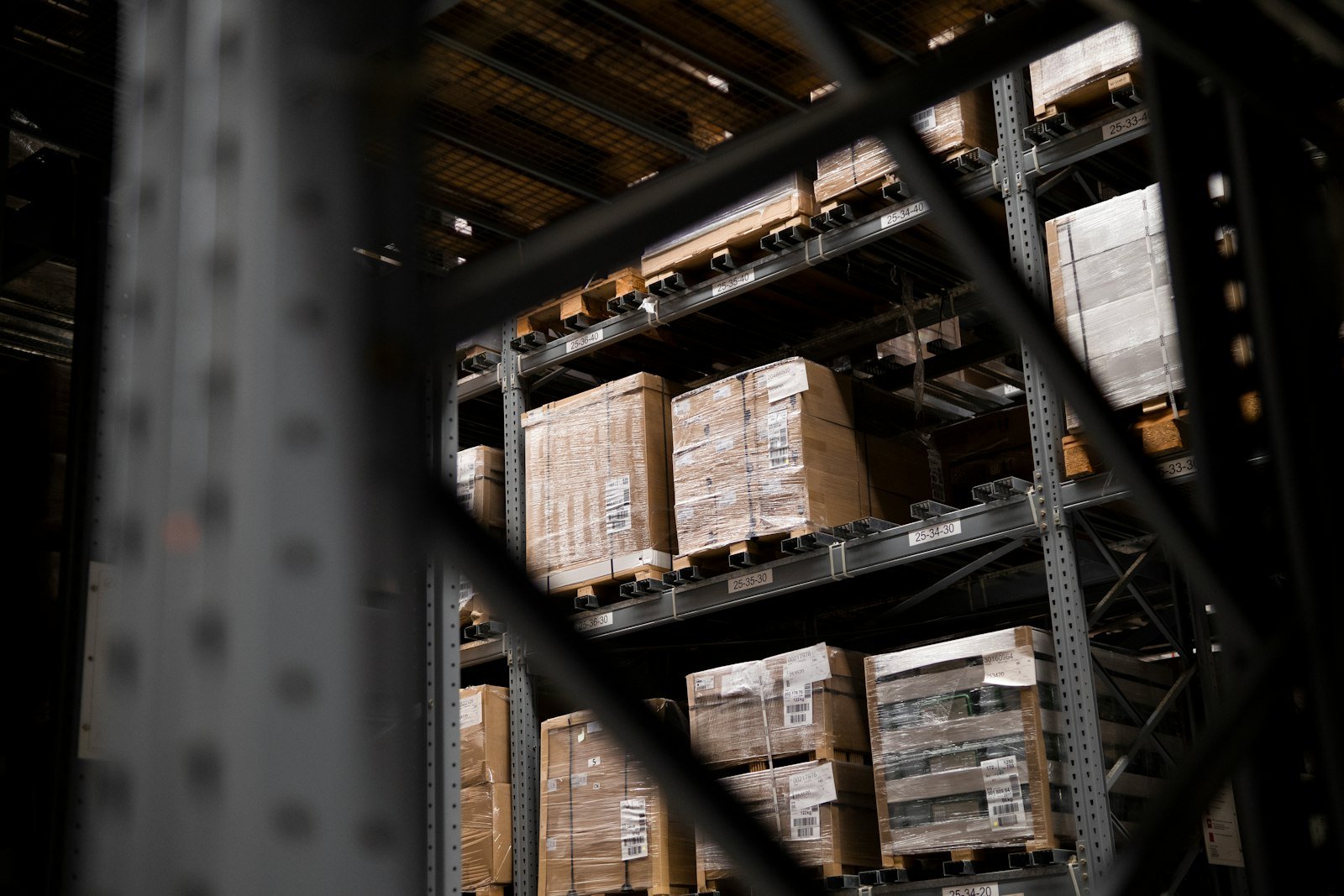


What Is CBM in Shipping?
CBM stands for cubic meter, the unit used to measure the volume of a shipment in international shipping. One cubic meter is the space of a box measuring 1 meter long, 1 meter wide and 1 meter high. Freight forwarders and shipping lines use CBM to calculate how much space your cargo occupies in a shipping container, an aircraft or a truck, and therefore how much you pay for freight.
In simple terms: the more space your goods take up, the higher your CBM, and the higher your freight costs, especially for sea freight shared in a container (LCL), where rates are quoted per CBM.
Many importers focus only on weight. But two shipments with the same total weight can have very different shipping costs, because one is bulky and light while the other is small and heavy. To understand shipping costs properly, three things must always be considered together: weight, volume (CBM) and product type.
How to Calculate CBM: The CBM Formula
The CBM formula is simple: multiply the length x width x height of one carton in meters, then multiply by the number of cartons.
CBM = Length (m) × Width (m) × Height (m) × Number of cartons
If your package dimensions are in centimeters, divide the result by 1,000,000:
CBM = Length (cm) × Width (cm) × Height (cm) ÷ 1,000,000 × Number of cartons
CBM Calculation Example
You are shipping 50 cartons, each measuring 60 cm (length) × 40 cm (width) × 50 cm (height):
- Volume of one carton: 60 × 40 × 50 = 120,000 cm³
- Convert to CBM: 120,000 ÷ 1,000,000 = 0.12 CBM per carton
- Total CBM: 0.12 × 50 cartons = 6 CBM
Always measure the outside dimensions of the packed carton, including packaging, and round up. Small measurement errors on one carton multiply across the whole shipment volume. To convert CBM to cubic feet, multiply by 35.315 (1 CBM ≈ 35.3 cubic feet).
Free CBM Calculator
Use our CBM calculator to calculate the total CBM and chargeable weight of your shipment. Enter the length, width and height of one carton in centimeters, the number of cartons and the gross weight per carton.
CBM & Chargeable Weight Calculator
Enter the outside dimensions of one packed carton.
Estimates for guidance only. Carriers may apply their own minimum charges, dim factors and rounding. Ask us for an exact shipping quote.
Gross Weight vs Volumetric Weight vs Chargeable Weight
Carriers do not simply charge by actual weight. They compare the actual weight with the space your cargo occupies, and charge for whichever is greater. This is called the chargeable weight.
- Gross weight (actual weight): the total weight of the goods including packaging, measured on a scale.
- Volumetric weight (dimensional weight): a weight calculated from the cargo volume using a dimensional weight factor (dim factor) set by the carrier.
- Chargeable weight: the higher of the two, used to calculate freight charges.
This is why bulky but light shipments, such as furniture, pillows or plastic products, often cost more to ship than heavier shipments of compact goods like metal parts.
How CBM Affects Shipping Costs by Shipping Method
Sea Freight (LCL): W/M, Weight or Measurement
For LCL shipments (less than container load), ocean freight is quoted per CBM using the W/M rule (weight or measurement). The carrier compares the total CBM with the total weight in metric tons (1 CBM = 1,000 kg) and charges the higher figure.
For example, a shipment of 6 CBM weighing 2,000 kg is charged as 6 revenue tons (by measurement). A shipment of 2 CBM weighing 3,000 kg is charged as 3 revenue tons (by weight). Most consolidators also apply a minimum charge, often 1 CBM.
Air Freight: Volumetric Weight
For air freight and air cargo, volumetric weight usually uses a dim factor of 6,000:
Volumetric weight (kg) = Length (cm) × Width (cm) × Height (cm) ÷ 6,000
This means one cubic meter counts as about 167 kg. Express couriers often use a factor of 5,000 (1 CBM = 200 kg). Because aircraft space is limited, light but bulky goods quickly become expensive by air.
Full Container Load (FCL): Container Space
For FCL shipments, you pay per container rather than per CBM. Here CBM tells you which container you need and whether your goods fit. Because cartons never fill every centimeter, the usable space is lower than the maximum capacity:
| Container | Internal volume | Practical loading volume |
|---|---|---|
| 20 ft container | about 33 CBM | about 25–28 CBM |
| 40 ft container | about 67 CBM | about 55–58 CBM |
| 40 ft high cube | about 76 CBM | about 65–68 CBM |
Good container load planning, stacking cartons efficiently and using the full height, can save you a whole container. Shipping air inside a container is wasted money.
What Is the Price per CBM?
There is no fixed price per CBM. The freight rate depends on the route, the shipping method, the season (rates rise before Chinese New Year and other peak seasons), port congestion, fuel surcharges and carrier availability. Your total transportation cost also includes local charges at origin and destination, customs clearance and delivery.
That is why it is important to compare quotes based on the same CBM, weight and services included. A lower quote may simply exclude charges you will pay later, while a higher one may reflect more accurate assumptions. For a complete picture, always calculate your full landed costs, not only the freight rate.
Product Type: The Hidden Cost Driver
Many importers assume that two products with the same weight and CBM will cost the same to ship. This is rarely true. Products classified as fragile, high-value, regulated or hazardous, such as some electronics with batteries, require special handling, careful stacking, extra documentation or specific loading methods inside the container. Some are subject to more inspections or customs scrutiny, which adds time and cost. Even within the same category, differences in materials or intended use can change how goods are shipped and cleared.
Why Two Shipments With the Same Weight Cost Differently
When weight, CBM and product type are combined, the differences become clear. One shipment may occupy more space, require special handling or involve higher customs risk. One may be packed efficiently on pallets, while the other is loosely boxed. Route, season and carrier availability then change the final price. Shipping costs are dynamic, and every quotation is based on a specific set of variables at a specific time.
How to Reduce Your CBM and Freight Costs
- Optimize packaging: oversized cartons and excessive protective material increase volume. Ask the factory for compact, export-quality packaging.
- Measure accurately before booking: confirm real carton dimensions and weights with the supplier, not estimates.
- Consolidate suppliers: combine goods from several factories into one shipment instead of paying minimum charges several times.
- Choose the right method: compare LCL against FCL once your shipment reaches about 15 CBM, as a full container may become cheaper.
- Plan container loading: efficient stacking increases the usable space in each container.
Why Professional Assessment Matters
Factories usually provide shipping information based on convenience, not on minimizing your landed cost. At Alanovas, we look at weight, CBM and product type together, check real carton dimensions with suppliers, consolidate cargo in our warehouse and supervise container loading. Our goal is not the cheapest number on paper, but the most accurate one, so you understand exactly what you are paying for before production or shipping. Learn more about our logistics and shipping coordination, or contact us for a shipping quote.
FAQ
Frequently Asked Questions About CBM
What does CBM mean in shipping?
CBM means cubic meter. It is the standard unit for measuring the volume of cargo in international shipping, used to calculate freight charges and container space.
How many kg is 1 CBM?
It depends on the shipping method. For sea freight LCL, 1 CBM is compared with 1,000 kg (W/M rule). For air freight, 1 CBM equals about 167 kg of volumetric weight, and for express couriers about 200 kg.
How many CBM fit in a 20 ft or 40 ft container?
A 20 ft container holds about 25–28 CBM of cartons in practice, a 40 ft container about 55–58 CBM, and a 40 ft high cube about 65–68 CBM, depending on carton sizes and how well the goods are stacked.
What does W/M mean in shipping?
W/M means “weight or measurement”. In LCL sea freight, the carrier charges either by weight (per 1,000 kg) or by volume (per CBM), whichever is greater.
Is CBM or weight more important for shipping costs?
For LCL sea freight, CBM usually matters most, unless the goods are very heavy. For air freight, the chargeable weight is the higher of actual weight and volumetric weight.