Selling Chinese goods in the United States used to be a sourcing problem. Today it is just as much a compliance and tariff problem. Two importers can buy the same product from the same Chinese supplier and end up with very different landed costs, simply because one handled customs clearance correctly and planned for duty changes, and the other did not. This guide is written for people who import from China to USA as Amazon FBA sellers, ecommerce brands and small wholesalers, and it starts where US customs starts: with what the border actually checks.
We are Alanovas, a sourcing and shipping partner based in Jinhua, close to Yiwu and the ports of Ningbo and Shanghai. We see the Chinese side of every shipment, so we know which mistakes begin at the factory and only show up weeks later in a US port. Rates and import regulations change often. Use this article to learn what to ask, then confirm current figures with a licensed customs broker. The key details that matter most are classification, filings, product approvals and your supply chain.
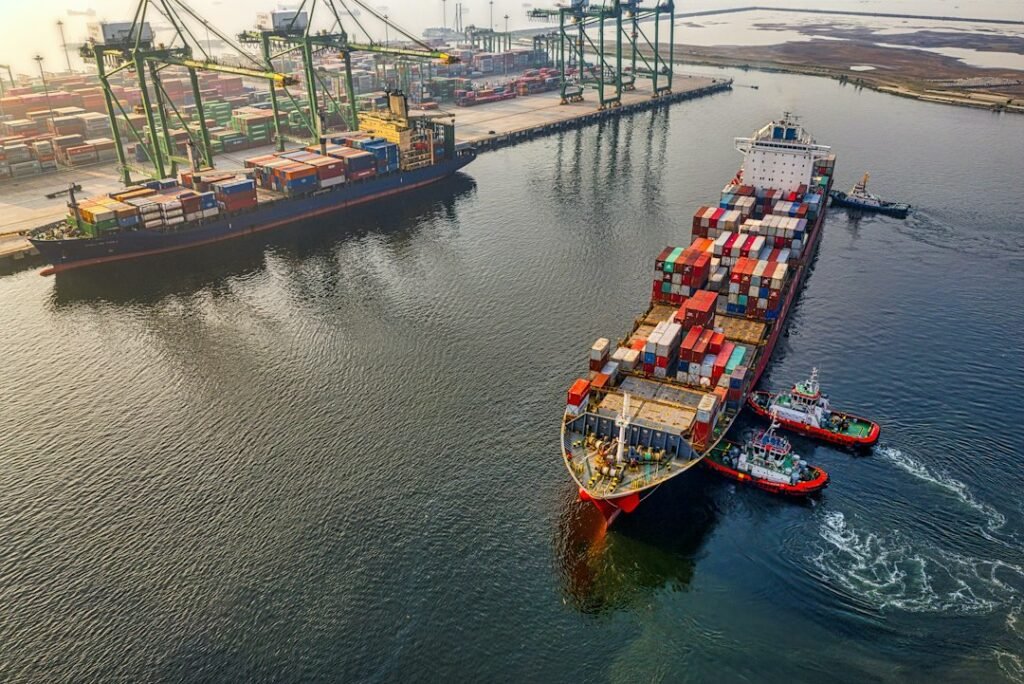
When a container from China to the USA reaches an American port, US customs does not simply look at the goods. It checks a chain of facts, and every link has to match. This is how importing goods really works in international trade.
If one of these links is weak, you get a hold, an exam, a penalty or additional fees nobody budgeted for. How much you pay in the end usually depends on how well you prepared before the goods left China. The rest of this guide follows the same order the border does.
Tariff classification is the step most small importers skip, and it is the one that moves the price the most. The ten-digit HTS code determines the import duty, and the same product can be classified in more than one way depending on material, use and construction. Proper classification is the cheapest insurance you can buy.
How to approach it:
Many goods from China carry additional duties on top of the base rate, a legacy of the trade war that has been adjusted several times since. Because those measures are attached to specific codes and not to product families, a small difference in classification can lead to much higher costs. We never quote a duty percentage in a guide like this, because it may be wrong by the time you read it. What the final bill will be for your product always depends on the exact code and the date you import. If you want to see how big the trade flow is, the Census Bureau publishes data on US imports from China, but it will not tell you what your own product pays.
Duty is only half the question. Many products must also satisfy partner government agencies, and these rules are enforced at the border, not at the supplier.
| Product type | Agency to check | What it usually means |
|---|---|---|
| Food, supplements, cosmetics, medical devices | FDA | FDA registration, labelling rules and sometimes prior notice |
| Children's products and toys | CPSC | Safety testing and a children's product certificate |
| Electronics with wireless parts | FCC | Equipment authorization and labelling |
| Batteries, aerosols, chemicals | Carrier and transport rules | Hazardous materials packaging and declarations |
| Wood, plants, textiles | USDA and labelling rules | Packaging and fibre-content requirements |
For Amazon sellers there is an extra layer: the marketplace may ask for test reports or certificates even when customs does not. Ask your supplier for the reports before you place the order, and keep copies. A pre-shipment inspection is the cheapest moment to confirm the product, the labels and the carton marks match what you approved. Ask also whether the goods need an export license on the Chinese side, which is rare but possible for some regulated items.
Two items catch first-time importers out because they happen before the cargo even arrives.
Importer security filing. For ocean freight the importer security filing, often called ISF 10+2, must be transmitted to US customs at least 24 hours before the cargo is loaded onto the vessel in China. It includes details such as the manufacturer, the seller, the buyer, the container stuffing location and the consolidator. Late or inaccurate filings can lead to penalties, and your freight forwarder or broker needs data from your supplier to file. Ask the factory for those details early.
Customs bond. A customs bond is a guarantee to US customs that duties and fees will be paid. You can buy a single-entry bond for one shipment or a continuous bond if you import throughout the year. Most regular importers choose the continuous bond.
The customs clearance process then runs in a fixed order: the carrier sends an arrival notice, your broker files the entry, you pay duties and customs charges, and customs either releases the goods or selects them for an exam. A formal entry is the standard route for commercial shipments, and an informal customs entry applies only to low-value goods under the current threshold. From the moment the notice arrives, the clock for storage charges starts running, so do not wait until the goods arrive to organise trucking.
The de minimis exemption once let low-value parcels enter the United States without duty and with minimal paperwork. That rule has been narrowed sharply, and the situation has kept changing, so do not build a business model on it. If you plan to send samples, prototypes or small first orders by express courier, ask the courier or your broker what duties and documents apply on the day you ship. Treat every parcel as dutiable until you have confirmed otherwise, and always include an accurate commercial invoice. Other shipments, such as repeat parcels from the same supplier, can be treated as one commercial flow, which is another reason to plan properly.
Where your cargo lands changes your transit times, your trucking bill and your risk of delay. The shipping method you choose and the port you use should be decided together.
| Gateway | Typical use | Things to weigh |
|---|---|---|
| Los Angeles and Long Beach | Fastest sea route from China, huge volume | Congestion can swing delays, drayage and rail costs |
| Oakland and Seattle-Tacoma | Northern California and Pacific Northwest | Fewer sailings, sometimes calmer terminals |
| New York and New Jersey | East Coast consumers, dense population | Longer ocean time, often routed through the Pacific and Panama or Suez |
| Savannah and Charleston | Southeast distribution and inland hubs | Strong for large retailers and warehouses |
| Houston | Gulf and Texas distribution | Useful for the central United States |
Sea freight to the West Coast typically takes around three to five weeks port to port, while East Coast routings are usually longer. Add time for customs clearance, drayage to a warehouse and, if the cargo is moving inland, rail. If your Amazon inventory needs to reach fulfilment centres by a certain date, count backwards from that date and add a buffer for the shipping time. When the goods arrive late, storage and redelivery fees add up fast. Our guide to FCL versus LCL shipping from China explains when a full container is worth it, and you can read more on FCL shipping and LCL shipping. For urgent stock, air freight or express courier cuts the time to days, but at a much higher cost per kilogram, and some forwarders sell door to door service that bundles the whole journey into one price.
Most commercial cargo travels by sea because the cost per kilogram is far lower, but air freight is the right tool when stock is about to run out or the product is small and valuable. Both are priced on the same idea: carriers charge for the space your cargo takes up, not only for what it weighs.
A practical approach is to send the first small order or an urgent top-up by air, then move repeat orders to sea once the product has proven itself. Ask your forwarder to quote both options for the same cargo so you can compare the total landed cost, not only the freight line.
The numbers below are made up to show the logic. They are not quotes and they are not current duty rates. Replace every figure with your own quotes before you decide anything. International shipping costs, import duty and fees are the lines most likely to surprise you.
Assume you import 1,000 units of a small household product, a total of 20 cartons, shipped LCL to the US West Coast.
| Cost line | What it represents | How to estimate it |
|---|---|---|
| Product cost | Unit price multiplied by 1,000 units | From the supplier quote and agreed payment terms |
| China-side charges | Inland trucking, export clearance, packing | From your forwarder |
| Ocean freight (LCL) | Charged by volume or weight | From your forwarder, close to the ship date |
| Cargo insurance | A small percentage of cargo value | From your forwarder or insurer |
| Import duty | HTS rate plus any additional duties | From your broker, for the exact ten-digit code |
| Merchandise processing fee | A small percentage of value, with a minimum and a maximum | From your broker |
| Harbor maintenance fee | A small percentage of cargo value on ocean shipments | From your broker |
| Broker, bond and ISF fees | Flat service charges | From your broker |
| Drayage and delivery | Trucking from the port or warehouse | From your forwarder |
Divide the sum by 1,000 and you have your total landed cost per unit. Run the same calculation at two different duty scenarios, one with the current rate and one with a higher one. If the second scenario destroys your margin, the product is a risk, no matter how good the factory price looks. Shipping costs also move with fuel prices and seasonal peaks, so ask for fresh quotes close to the sailing date. Tracking total costs for each shipment, not each quote, helps you spot hidden fees early and improves cost efficiency over time.
A freight forwarder books the space on the ship or plane, arranges pickups, manages documents and tracks the cargo. Freight forwarding is more than booking a container: a good forwarder also advises on routes and warns you about local charges. A licensed customs broker is a different role. The broker files the entry, confirms classification and deals with customs when questions arise. Many forwarders work with a broker, so you can often get both through one provider, but ask who is responsible for each step, because that decides who pays when something goes wrong. Our logistics and shipping coordination team can consolidate cartons from several Chinese suppliers in Jinhua and Yiwu into one shipment, which reduces the number of entries and the paperwork you manage.
For Amazon sellers the work does not end at customs. Amazon expects products to arrive with the right labels, in the right cartons, sent to the right fulfilment centres, so ship goods in a way that avoids rework.
Tariff policy between the two countries has changed repeatedly, and it will probably change again. You cannot predict it, but you can design your business so that a change does not break it. This is a core part of global trade today, and what you pay in the future usually depends on choices you make now.
To find suppliers you can trust, combine several routes: wholesale markets such as Yiwu, the Canton Fair, online platforms and a sourcing partner who already knows the Chinese factories. A reliable supplier answers technical questions clearly, shares production and material details, and accepts third-party quality checks, because a supplier who cannot document origin and materials is a compliance risk for your international business. Our sourcing and supplier management service verifies companies before you pay a deposit. Agree on payment terms that protect you, such as paying a deposit and the balance after inspection, and check that the unit price on the contract matches the commercial invoice. Online platforms such as Alibaba, 1688, Global Sources and Made-in-China list millions of suppliers and are useful for discovery, but a listing is not verification. 1688 is a Chinese-language platform for the domestic market, so you usually need someone who reads Chinese to use it well.
How to pay a Chinese supplier. The most common method is a bank transfer, usually a deposit before production and the balance after inspection. For a large first order with a new supplier, some buyers use a letter of credit, where the bank pays only when the documents match the agreed terms. It gives strong protection but adds bank fees and strict document checks. Marketplace payment protection can work for small orders. Whatever you choose, pay only into a company account that matches the name on the contract and the invoice, never into a personal account. Agree in writing which currency the invoice uses, who pays the bank charges, and keep proof of every payment, because customs can ask how the goods were paid for.
Customs clearance runs on documents. Ask your supplier for these before the cargo leaves, and check that quantities, values and descriptions match across all of them. More detail is on our page about trade documents and process guidance.
Incoterms in plain words. The Incoterm on your commercial invoice decides who pays for what, and where the risk passes to you. With EXW you collect the goods at the factory gate and handle export clearance yourself. With FOB the supplier delivers the goods onto the vessel at the Chinese port, and you pay the ocean freight and everything after that. With CIF the supplier pays the freight and insurance as far as the US port, but the risk still passes to you once the cargo is loaded. With DDP the supplier promises to deliver with duties paid, which means acting as the importer in the United States and is rarely practical for a Chinese factory. Many importers who work with their own forwarder start with FOB, because they keep control of the freight and the customs entry.
If you want a second pair of eyes before committing money, send us your product, target quantity and destination state. We will tell you which agencies are likely to be involved, what documents to request from the factory, and how to ship it from Jinhua, Yiwu, Ningbo or Shanghai with a clear cost breakdown. Request a free quote and you will hear back within one business day.
The Importer of Record is the party legally responsible for the entry with US customs. For most Amazon sellers and wholesalers it is their own company, which needs a customs bond and a tax ID. Do not assume the freight forwarder or the factory will act as importer unless that is agreed in writing.
Ask the factory to apply the correct barcode labels, bag and carton warnings and shipping-carton labels. Confirm any test reports or certificates your product category needs, and plan your destination fulfilment centres or prep centre before the cargo ships.
Do not assume so. The de minimis exemption has been restricted, and samples may be dutiable or need extra paperwork. Ask your courier or customs broker what applies when you ship, and always include an accurate commercial invoice.
Additional duties are attached to specific ten-digit HTS codes, so the impact depends on exactly how your product is classified. Ask your broker for the full duty picture for your code, and calculate your landed cost at both the current and a higher duty level.
Duty drawback can refund duties on goods that are later exported or destroyed under specific conditions, but the rules are technical and the paperwork is heavy. Ask a customs broker whether it applies to your business before you count on it.
You are allowed to file your own entries, but most importers use a licensed customs broker because the rules and agency requirements are complex and mistakes are costly. A broker can also check classification and compliance before the goods ship.
Tell us what you want to source from China and where it is going. We reply within 1 business day with clear next steps. Quotations start at $50 for up to 3 products, credited to your service fee when you place the order. See our services and fees.
Tell us your product, quantity and destination. We reply within 1 business day with a clear plan and quote.
Alanovas is a China-based sourcing and shipping partner in Jinhua, near Yiwu and Ningbo. We help importers across Africa, the Middle East, Europe and North America find suppliers, inspect goods and ship with clear costs.
We use essential cookies to make our website work. With your consent, we also use Google Analytics to understand how visitors use our site, and Google Maps to show our office location. You can accept, deny, or choose your preferences, and change your choice at any time.