If you want to import from China to UK, the shipping is the easy part. The hard part is the paperwork. A missing registration number, the wrong commodity code or a mismatched invoice can leave a full container sitting at the port while storage charges climb. This guide is built around the customs paperwork and rules that are specific to the UK since Brexit, so you can decide what to do yourself, what to hand to a customs agent, and what to settle with your Chinese supplier before any money moves.
Alanovas is a sourcing and shipping partner based in Jinhua, close to Yiwu, Ningbo and Shanghai. We see the China end of UK shipments every week: the factory, the packing, the documents and the booking. Rules change, and the UK government updates guidance often, so use this as a map and confirm figures on GOV.UK before you commit to an order.
When goods from China arrive in Great Britain, someone has to make customs declarations to HMRC. That someone is the importer, or a customs agent or transporter acting on their behalf. The import declaration states what the goods are, what they are worth, where they came from and how you want them treated for customs duty and import VAT. HMRC then decides whether to release the shipment, ask questions or inspect the cargo at the UK border.
Three things must be right before the ship sails: your identity as an importer, the classification of the goods, and the customs value you declare. Everything else in this guide hangs off those three. Most businesses that run into trouble with a UK import got one of them wrong.
An EORI number (Economic Operators Registration and Identification number) is the identification number for your business in UK customs. For imports into Great Britain it starts with GB, followed by digits. You need an EORI number to make customs declarations in your own name, and a freight forwarder or customs agent will ask for it before they quote.
Registration is free and done online through GOV.UK. You will need your business details and either a VAT number or your unique taxpayer reference (UTR) if you are a sole trader or a company that is not VAT registered. Do not leave it to the week the container loads. If you also move goods to Northern Ireland or the EU, you may need a separate EORI number, so check which one applies.
The commodity code decides your duty rate. UK commodity codes follow the international HS system for the first six digits and add more digits for UK detail. You find yours by searching the UK Global Tariff on GOV.UK or by asking your customs agent to confirm it.
Your Chinese supplier will usually quote an HS code for their own export declaration. Treat that as a hint, not as the answer. A code that is slightly wrong can mean you pay too much customs duty, or too little customs duty, and HMRC can ask for the difference later. If your product sits between two codes, ask HMRC for an advance tariff ruling before you order in volume.
Some goods from China are also subject to anti-dumping duty on top of the normal rate. This applies to specific products, not to everything, so check the measure for your exact code. If you want to know how much duty you will pay, the commodity code and the customs value are the only two inputs that matter.
Import costs on a UK shipment are built in layers. This is the order HMRC works in:
| Layer | What it is | Notes |
|---|---|---|
| Customs value | Goods price plus shipping and insurance costs to the UK border | The base for everything below |
| Customs duty | Your duty rate multiplied by the customs value | Depends on commodity code and origin |
| Import VAT | Standard rate 20% on value plus freight plus duty | Reclaimable if you are VAT registered |
| Extra charges | Agent fees, port handling, delivery | Not taxes, but part of the total landed cost |
Notice that VAT and import duty are not calculated separately from each other: value added tax is charged on top of the duty, and on the freight and insurance costs too. Many first-time importers forget this and underestimate the bill.
Say you buy goods worth £10,000 from a Chinese supplier and shipping and insurance costs to the UK border add £1,500. Your customs value is £11,500. If your duty rate is 4%, the customs duty is £460. Import VAT at 20% is charged on £11,960 (value plus duty), which is £2,392. You pay about £2,852 in duty and VAT before agent fees, port charges and delivery. If you are VAT registered, most of that VAT comes back on your return. The 4% rate is an example, not advice: your own rate depends on your commodity code, so check it before you calculate your total landed cost.
Postponed VAT accounting (PVA) lets a VAT registered business declare import VAT on its VAT return instead of paying it at the border. You account for the VAT and reclaim it in the same return, so the net effect on cash is close to zero. Without PVA, you pay the VAT up front and wait to recover it, which can tie up a large sum on a big shipment. Ask your customs agent to apply PVA on your declarations if you are eligible, and keep the import VAT certificate or statement with your records.
Smaller parcels have been treated differently from commercial cargo, and the rules for low-value consignments and for sellers shipping to consumers are under review. If you sell on Amazon UK or through your own online shop, do not assume a small shipment is duty-free, and check the current thresholds and who must collect VAT on GOV.UK before you plan your prices.
You can file your own declarations through the HMRC Customs Declaration Service (CDS), but you need compatible software, a way to pay duty and enough time to learn the system. Most small importers use a customs agent instead. A good agent completes the customs declaration form data, applies PVA, chases HMRC if a shipment is held and tells you early if something looks wrong.
How to choose:
Either way, customs paperwork is only as good as the information from your supplier, so agree the invoice format and product descriptions before production starts.
Not everything can be imported freely. Imported controlled goods, such as certain food and plant products, chemicals, some electronics and items under sanctions, need an import licence or specific certificates. Check whether your goods are relevant goods for licensing before you pay a deposit, not after they are packed.
Product safety is the other trap. Many goods sold in Great Britain need a UKCA mark, and for several product categories the CE mark is still accepted for now. Which one applies depends on the product, so confirm it with the Office for Product Safety and Standards (OPSS) or Trading Standards guidance. Toys, electrical goods, cosmetics, protective equipment and anything for children get the most scrutiny. Ask your supplier for test reports in your name, and consider an independent check before shipping. Our page on pre-shipment inspection in China explains how that works at the factory.
The rules above are for Great Britain. Northern Ireland follows different arrangements under the Windsor Framework, and goods arriving there may be treated as moving into the EU single market for some purposes. If you deliver to Northern Ireland, check the current GOV.UK guidance or ask your customs agent before you quote a customer there.
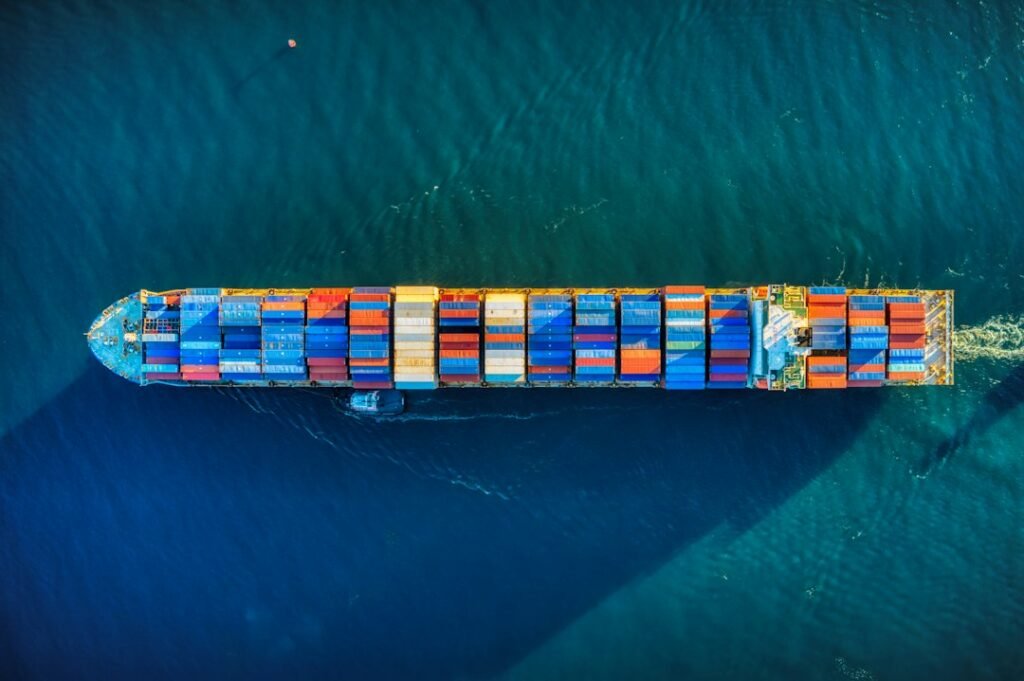
Most full containers from China arrive at one of five main gateways: Felixstowe, Southampton, London Gateway, Liverpool and Teesport. The best port depends on where your customer or warehouse is, not on which one looks cheapest on a quote. A cheaper port that adds a long lorry trip often costs more overall, and it is worth asking your forwarder to compare the full door-to-door price.
Typical timings, port to port:
If you are choosing between a full or a shared container, read our guide to FCL vs LCL shipping from China, and see the pages for FCL shipping and LCL shipping. Before the goods can clear customs on arrival, your export declaration must also be done in China, which your supplier or forwarder normally handles.
Plan around Chinese New Year. Factories close for two to four weeks around the holiday, and freight rates and port congestion rise before and after it. For stock you need in spring, place the order before the end of the year.
The same rules apply, but the priorities differ. An Amazon or Shopify seller usually ships smaller quantities, needs product labelling and barcodes right on day one, and cares most about speed to the fulfilment centre. A wholesale or retail buyer ships larger volumes, cares most about unit price, payment terms and landed cost, and often uses a freight forwarder with a UK warehouse delivery. Tell your agent which of the two you are, because it changes the cheapest route, and it is worth building lasting supplier relationships with factories that already export to the UK.
Keep your commercial invoices, packing lists, bills of lading, customs declarations, import VAT evidence and proof of payment. HMRC expects importers to keep customs records for several years, and you need them to reclaim VAT or to correct a declaration if you paid too much or too little. Confirm the exact retention period on GOV.UK. Our page on trade documents and process guidance lists what each document should contain, and our page on payment methods covers safer ways to pay Chinese suppliers.
Yes, if you are making customs declarations in your own name. The number is free and starts with GB for goods entering Great Britain. If a customs agent declares in their name, you may still need one for your own records and VAT.
Usually yes. Import duty depends on the commodity code, the value of the goods and where they were made. Some goods carry a zero rate, and some carry extra duty such as anti-dumping measures. Check your code on the UK Global Tariff before you order.
Expect customs duty at your commodity code rate, plus import VAT at the standard 20% charged on the goods, shipping, insurance and duty. If you are VAT registered, you can normally reclaim the VAT, and postponed VAT accounting lets you avoid paying it up front.
You are not required to use one, but most first-time importers do. An agent files the declaration through the Customs Declaration Service, applies postponed VAT accounting and deals with HMRC questions. Self-filing is realistic once you ship regularly.
Sea freight usually takes about five to six weeks door to door, with extra time when ships are rerouted around the Cape. Air freight takes roughly five to ten days. Add production time, customs clearance and delivery to your warehouse.
If you are VAT registered and the goods are for your business, usually yes, using your import VAT evidence or postponed VAT accounting on your VAT return. If you are not VAT registered, you cannot reclaim it, so include it in your pricing.
Before you pay a supplier, ask for a complete landed cost: goods, freight, insurance, duty, VAT, agent fees and delivery to your door. Alanovas checks suppliers, inspects the goods and books the shipment from Jinhua, Yiwu, Ningbo or Shanghai with the costs spelled out. If you want a second opinion on a quote you already have, send us the details and we will reply within one business day. Our sourcing and supplier management service covers supplier search and negotiation if you are still choosing the factory.
Tell us what you want to source from China and where it is going. We reply within 1 business day with clear next steps. Quotations start at $50 for up to 3 products, credited to your service fee when you place the order. See our services and fees.
Tell us your product, quantity and destination. We reply within 1 business day with a clear plan and quote.
Alanovas is a China-based sourcing and shipping partner in Jinhua, near Yiwu and Ningbo. We help importers across Africa, the Middle East, Europe and North America find suppliers, inspect goods and ship with clear costs.
We use essential cookies to make our website work. With your consent, we also use Google Analytics to understand how visitors use our site, and Google Maps to show our office location. You can accept, deny, or choose your preferences, and change your choice at any time.