Most guides to import from China to Algeria start with freight rates. That is the wrong place to begin. In Algeria, the order of the work is different: your legal status as a trader, your bank and your payment method come first, and the container comes second. Importers who get that order wrong end up with goods waiting at the port, or with a supplier who has been paid but cannot ship.
This guide is written for Algerian traders who buy in China, whether for resale in a shop, for a construction site or for their own workshop. It follows the sequence a real shipment follows: status and paperwork, the bank, the supplier, the quality check, the shipping route, and finally the port and the road to your warehouse. Alanovas is a sourcing and shipping partner in Jinhua, close to Yiwu and the ports of Ningbo and Shanghai, so the China side of the process is what we handle every week. Algerian rules, however, have changed several times in recent years, so treat every legal point below as a checklist of questions to confirm with your bank, Algerian customs and your transitaire (customs agent) before you commit money.
Algerian customs and banks will only deal with a registered trader. In practice that means a commercial register entry that covers the activity you plan to run, a tax identification number (NIF) and a customs identification. Check that the activity code on your register matches the goods you want to buy, because a mismatch can block both the bank transfer and the customs declaration. Algerian law also distinguishes between traders who import for resale and companies that import for their own production, so confirm which status applies to you.
The second question is what you are importing for:
Ask your bank which of the two your order falls into before you pay a deposit. It is a ten-minute conversation that can save you months.
For Algerian importers, the payment method is not a detail you negotiate at the end. Your bank domiciles the import operation, which means the transaction is registered with the bank before the goods ship, and the bank controls how foreign currency leaves the country. Historically, trade finance for imports meant a documentary credit or a documentary remittance, where the bank releases the payment only when the shipping documents arrive and match the contract.
This changes how you buy in China:
Our page on payment methods explains the safer ways to pay Chinese suppliers, and the same logic applies when a bank sits between you and the factory.
When you wire a deposit and discover a problem later, you can negotiate. When a documentary credit is issued, the documents drive the payment, and the bank checks paper, not products. A shipment can therefore be fully paid and still be wrong.
That is why independent inspection in China is worth more for Algerian importers than almost anywhere else. An inspector visits the factory, checks quantities, specifications, packing and labelling against your order, and reports before the cargo is loaded and before the final payment step. Read more about the process in our guide to pre-shipment inspection in China. Pair it with careful supplier verification and management so you know whether you are dealing with a factory or a trading company. A reliable supply chain starts at the factory gate, not at the port.
Some categories sell well and cross the border without drama. Others attract extra checks. Always confirm the status of your exact product before ordering, because imported goods are checked against the rules for their category.
For anything on a restricted items list, or when an import license or special approval might apply, ask your transitaire first. Buying first and asking later is the most expensive way to learn.
Every product needs an HS code, and the code drives the import duty and the other taxes. Customs duties, VAT (TVA) and sometimes additional levies are calculated on the customs value, which normally includes the goods, the freight and the insurance. We will not quote percentages here because they change with each finance law and depend on the product category. To calculate duties for your own order:
A wrong code or an undervalued invoice is the most common reason for hefty fines, so declare honestly and keep invoices, packing lists and transfer proofs consistent.
Sea transportation from China to Algeria crosses the Indian Ocean and the Suez Canal, or sometimes goes around Africa when routes change, usually transshipping at a Mediterranean hub before the final leg to an Algerian port. Because of the transshipment, the transit time is longer and less predictable than a direct service, and these shipping routes depend on carrier schedules.
| Origin port | Typical transit time to Algeria | Comment |
|---|---|---|
| Ningbo or Shanghai | Roughly 35 to 55 days door to port | Good frequency, closest to Jinhua and Yiwu cargo |
| Shenzhen or Guangzhou | Roughly 35 to 55 days | Common for electronics and household goods |
| Air freight to Algiers | Roughly 5 to 10 days | For urgent shipments and samples |
These are planning figures, not promises. Ask your freight forwarder for the current schedule, and add a buffer for port congestion and for the Chinese New Year slowdown. Sea freight rates move with the season, fuel prices and the shipping volume on the route, so ask for fresh freight costs close to your ship date rather than relying on an old quote. Trade data shows that China sells Algeria large volumes of machinery, vehicles, electronics and building products, which keeps demand for space on this lane steady even though Algeria's own exports are dominated by natural gas and oil.
See our guide on FCL vs LCL shipping from China when you decide how to load your cargo, and our dedicated pages for FCL and LCL.
Sea freight is the default for shipping goods that are bulky or heavy. A full container load gives you a fixed price and a sealed box, so you control the entire container and its contents, while smaller shipments can travel as a consolidated container, which saves money but adds handling time at both ends. Bulk cargo, general cargo and oversized goods need special arrangements, so tell your forwarder about your shipping needs early.
Air shipping makes sense for urgent shipments, high-value goods, samples and spare parts. In Algeria most air cargo arrives at Houari Boumediene Airport in Algiers, and shipments from Shanghai Pudong, Guangzhou or Shenzhen usually connect through a hub. Compare the cost per kilo with the cost of the delay, because a stopped production line can cost more than the freight charges, and weigh the cost effectiveness of each option against the value of your goods. Many importers combine both: air freight for the first sample order, sea freight for repeat volumes.
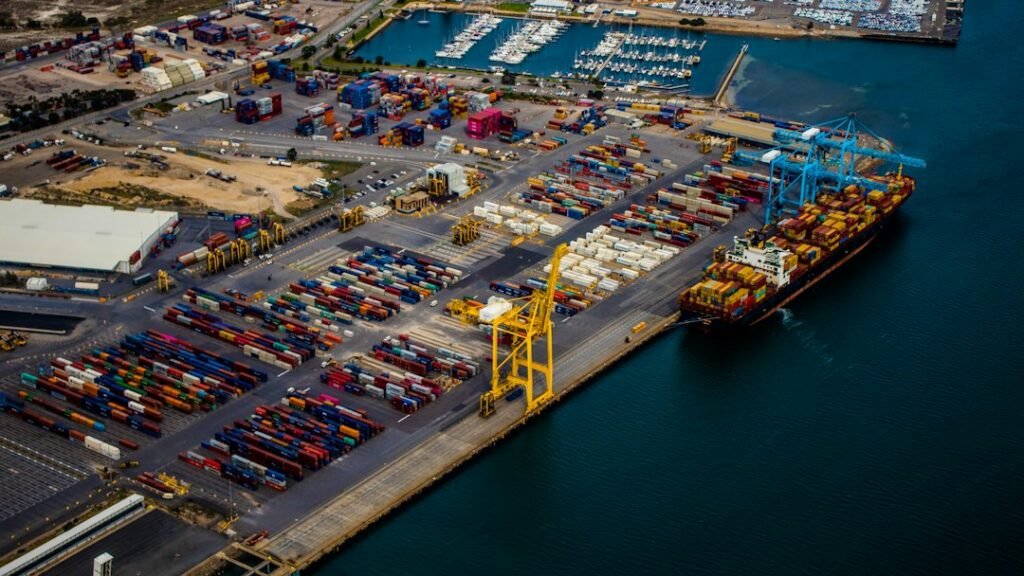
Algeria's main ports are the key ports for container traffic, and the one you choose affects both the cost and the delay:
Choose the Algeria port closest to your warehouse unless your forwarder has a reason to prefer another. Port operations vary, and port congestion can extend the stay of a container. Storage and demurrage charges start counting once the free days expire, so ask your forwarder how many free days you have and how long clearance usually takes at your port. Other shippers may quote a low sea price and leave the port charges out, so compare the total cost, not the headline rate.
Goods leave China only after export clearance, which your supplier or forwarder arranges. On arrival, customs clearance in Algeria is normally handled by a customs agent. The transitaire, who acts like a customs broker, prepares the customs declarations, deals with the customs office and customs officials when an inspection is requested, and follows the container until it leaves the port. The clearance process runs better when the documents are ready before the cargo arrives. Choose your agent before the cargo ships, not after, and give them the paperwork early. Documents are often requested in French or Arabic, so ask your supplier for French versions of the key papers where needed.
Prepare these shipping documents for every shipment:
Our page on trade documents and process guidance explains how these documents fit together.
Do not judge a supplier on the unit price alone. The international shipping cost is only one line, and your total cost for an Algerian shipment should include:
Some forwarders offer a delivered duty paid service, also called DDP service or door service, where one price covers everything up to your door. It is easier to budget, but check who is legally the importer and what the quote includes before you accept. Our logistics and shipping coordination service explains how we quote each step separately so that nothing is hidden, and how sea and air freight options compare for your goods imported into Algeria.
If you want to import from China to Algeria without discovering the rules halfway through, start with a short call. Tell us your product, your quantity, your port and how your bank wants to pay. We will tell you which China-side steps to prepare first: supplier verification, sample checks, inspection and the documents your transitaire will ask for. Contact Alanovas and we will reply within one business day.
It depends on the product and on your status. Some goods need a special approval or authorisation, and importers must be properly registered as traders. Because the rules have changed several times, ask your bank and your transitaire what applies to your exact product before you order.
Possibly, but the payment method is controlled by your bank and by the rules for your type of import. Many Algerian importers have used a documentary credit or a documentary remittance. Ask your bank for the current options, then agree on the same method with your supplier at the quotation stage.
By sea, plan on roughly five to eight weeks from a Chinese port to an Algerian port, longer if the route transships at a Mediterranean hub or if there is port congestion. Air freight takes about a week. Add production time, clearance and trucking to your own schedule.
Algiers is the largest, Oran serves the west, Djen Djen and Bejaia serve the centre and east, and Skikda handles general and industrial cargo. The best choice is usually the port closest to your warehouse with acceptable clearance times, so ask your forwarder about current delays.
In practice, yes. A transitaire files the customs declaration, deals with inspections and follows your container through the port. Choose one early and send them the documents before the cargo arrives.
Yes. Some goods are prohibited or restricted, and others need approval or conformity proof. Electronics with radio parts, some food and cosmetic products, medical products and used goods are common examples. Check your product with a transitaire before you buy.
Because bank-led payments are based on documents, not on the physical goods. An inspection before loading confirms quantities, specifications and packing while you can still ask the supplier to fix problems, which is far cheaper than discovering them at the Algerian port.
Tell us what you want to source from China and where it is going. We reply within 1 business day with clear next steps. Quotations start at $50 for up to 3 products, credited to your service fee when you place the order. See our services and fees.
Tell us your product, quantity and destination. We reply within 1 business day with a clear plan and quote.
Alanovas is a China-based sourcing and shipping partner in Jinhua, near Yiwu and Ningbo. We help importers across Africa, the Middle East, Europe and North America find suppliers, inspect goods and ship with clear costs.
We use essential cookies to make our website work. With your consent, we also use Google Analytics to understand how visitors use our site, and Google Maps to show our office location. You can accept, deny, or choose your preferences, and change your choice at any time.